
Every continuous caster has practical speed limits. Without complete process data, operators are often left to estimate exactly where those limits are.
Push casting speed too far and the risks increase: unstable mold conditions, quality problems, or potentially a breakout. Stay too conservative, and you may be giving up throughput that the caster could safely produce.
CasterANALYTICS helps replace that uncertainty with data.
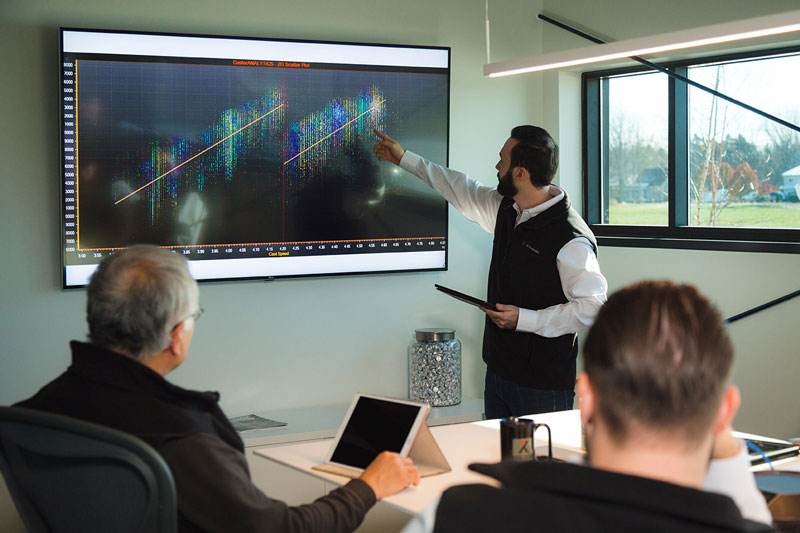
CasterANALYTICS, Kiss Technologies’ process-oriented data analytics platform for continuous casting, displays live caster data in context with historical performance for the same grade and other relevant operating parameters. Operators can see not only how fast the caster is running, but also how the process is behaving at that speed.
That combination of live and historical data can help identify optimal casting speeds, recognize changes in process behavior, and better understand the operating limits of the caster.
Key Takeaways:
- Casting speed cannot be evaluated by itself. Mold behavior, oscillation parameters, friction, grade, strand, section size, cooling, and other process conditions all influence how successfully a caster can operate at higher speeds.
- CasterANALYTICS combines live and historical data. Current casting conditions can be compared with historical performance for the same grade and other relevant parameters.
- Red, yellow, and green indicators make variation easy to see. Operators can quickly identify when current process conditions are consistent with historical performance or beginning to deviate from established patterns.
- Historical data can help identify optimal casting speeds and operating limits. Instead of relying only on assumptions about how fast the caster can run, engineers and operators can evaluate what has actually happened at different speeds.
- CasterANALYTICS from Kiss Technologies is built specifically for continuous casting. Data is organized around the casting process rather than presented as a collection of disconnected sensor tags.
What Is Caster Speed and Why Does It Limit Throughput?
Caster speed, also called casting speed or withdrawal speed, is the rate at which the strand is withdrawn from the mold. Because casting speed directly affects the volume of steel moving through the caster, increasing speed can increase tons produced per hour.
But casting speed cannot be increased independently of the rest of the process.
Faster withdrawal reduces the time available for the solidifying shell to develop as the strand moves through the mold. The appropriate casting speed therefore depends on factors including steel grade, section size, mold geometry, cooling conditions, mold oscillation, lubrication, and other operating parameters.
The important question isn’t simply:
How fast is the caster running?
It’s:
How is the casting process behaving at that speed?
That is the question CasterANALYTICS is designed to help answer.
How Does CasterANALYTICS Monitor Caster Speed?
CasterANALYTICS continuously displays caster speed alongside the other process variables that give that speed meaning.
Instead of treating speed as an isolated value, CasterANALYTICS organizes process data by parameters such as:
- Heat
- Steel grade
- Strand
- Casting speed
- Operating condition
- Other available caster and mold data
This allows operators and process engineers to evaluate the current cast in the context of comparable historical operating data.
Live Data + Historical Context
During casting, CasterANALYTICS dashboards display live process information and compare current conditions with historical data for the same grade and other relevant parameters.
Dashboard dials with red, yellow, and green indicators show the degree of variation from historical performance.
That makes it easier to recognize whether the caster is behaving consistently with previous operating patterns or whether important variables are beginning to move outside those patterns.
Instead of seeing only that the caster is running at a particular speed, operators can see what is happening to the process while it runs at that speed.
How Can CasterANALYTICS Help Determine Optimal Casting Speed?
Determining an optimal casting speed requires more than finding the highest speed the caster has reached.
The goal is to understand which speeds can be sustained while maintaining acceptable and stable process conditions for the specific grade and operating situation.
CasterANALYTICS provides the data needed to investigate those relationships.
For example, engineers can compare higher-speed heats with historical operation and evaluate how relevant process variables responded. If a higher casting speed produces conditions consistent with successful historical performance, that provides useful data supporting the operating decision.
If key variables begin to move outside their normal historical ranges as speed increases, CasterANALYTICS makes those changes visible as well.
Over time, this allows the plant to build a data-supported understanding of:
- Which grades have successfully operated at higher speeds
- Which process conditions were present during those heats
- Which variables change as casting speed increases
- Where process stability begins to deteriorate
- Where opportunities may exist to increase throughput
The result is a better understanding of optimal casting speed and practical operating limits based on the caster’s own data.
Why Does Mold Behavior Matter When Casting Faster?
Increasing casting speed changes more than throughput. It changes the operating relationships throughout the continuous casting process.
That is why evaluating higher casting speeds should include the mold and oscillation variables that influence shell formation, lubrication, friction, and mold/strand interaction.
Depending on the instrumentation available on the caster, CasterANALYTICS can bring relevant process data together so operators and engineers can evaluate these relationships rather than looking at individual signals independently.
Explore Mold Oscillation Monitoring Solutions →
Casting Speed and Negative Strip Time
Negative strip time is one example of why casting speed needs to be evaluated in context.
Negative strip time is the portion of the mold oscillation cycle during which the downward velocity of the mold exceeds the downward velocity of the strand.
Because negative strip time depends on both casting speed and mold oscillation parameters, changing casting speed changes the resulting negative strip time.
Monitoring that relationship—along with other relevant mold and process variables—helps operators understand whether oscillation conditions remain within the desired operating range as casting speed changes.
Learn More: What Is Negative Strip Time? →
Why Compare Live Caster Data With Historical Data?
A live process value tells you what is happening now. Historical data helps tell you whether what is happening now is normal.
The combination is especially valuable in continuous casting because the same value may have different significance depending on grade, strand, speed, section size, or other operating conditions.
CasterANALYTICS provides the context needed to make those comparisons meaningful.
For example, a process variable that appears unusual across the caster’s entire historical dataset may be completely normal for the specific grade being cast. Conversely, a value that looks acceptable in isolation may represent a significant departure from the historical behavior of that grade.
Comparing current operation with the right historical operating conditions helps distinguish meaningful deviations from normal process variation.
That is why organizing data around the casting process (not simply collecting more data) is important.
CasterANALYTICS vs. Generic Industrial Analytics Tool
Generic industrial analytics platforms can collect, trend, and visualize large amounts of plant data. The difference is continuous casting context.
CasterANALYTICS is structured specifically around how a continuous caster operates.
CasterANALYTICS vs. Generic Tools |
||
|---|---|---|
| Category: | Generic Industrial Analytics Tools: | CasterAnalytics: |
| Data Structure | Typically organized around plant tags, sensors, or configured data models | Organized around heat, grade, strand, speed, and casting conditions |
| Live Monitoring | Can display live process data when configured | Displays live casting data in continuous casting context |
| Historical Comparison | Requires configuration to establish relevant process comparisons | Compares current conditions with historical data for comparable casting conditions |
| Process Visibility | Depends on the models and dashboards developed by the user | Red/yellow/green indicators highlight variation from historical operating patterns |
| Application | Designed for general industrial use | Purpose-built for continuous casting |
| Support | Software-focused support varies by provider | Support options include continuous casting expertise as well as platform support |
The distinction isn’t simply the ability to collect more data.
It is the ability to organize and interpret that data in the context of the continuous casting process.
Kiss Technologies’ Guided Insights and Comprehensive Support options can also pair the platform with people who understand continuous casting, not just the software displaying the data.
Learn More About CasterANALYTICS →
Can CasterANALYTICS Work With an Existing Continuous Caster?
Yes. CasterANALYTICS is designed to use available continuous casting process data rather than requiring replacement of the caster’s existing control and instrumentation systems.
Available data can include casting speed and other caster process variables, as well as information from mold oscillation and mold friction monitoring systems when those systems are installed and their data is available.
The exact implementation depends on the caster, existing instrumentation, available process data, and how that data can be accessed.
This allows plants to build analytics around the equipment and process information they already have while incorporating additional monitoring data where appropriate.
Ready to Cast Faster?
Casting faster isn’t about accepting more risk. It’s about having enough information to understand where your operating limits are and where there may be an opportunity to safely increase speed.
CasterANALYTICS combines live process visibility with relevant historical data so operators and engineers can see how the caster is behaving at the current speed, and how that behavior compares with previous operation under similar conditions.
That makes it possible to evaluate casting speed based on actual process performance rather than assumptions alone.
Better data doesn’t simply tell you how fast you’re casting. It helps you understand how fast you can cast.
Talk to Kiss Technologies About CasterAnalytics →
Frequently Asked Questions About CasterANALYTICS and Caster Speed
What is a typical continuous caster speed?
There is no single typical casting speed for all continuous casters.
Casting speed depends on factors including caster type, steel grade, section size, mold geometry, cooling conditions, and operating practices. Billet casters, for example, generally operate at higher withdrawal speeds than slab casters because of their smaller cross-sections.
For optimization, the more useful benchmark is often the caster’s own historical performance under comparable conditions rather than a general industry average.
Can increasing caster speed increase steel production?
Yes. Increasing casting speed can increase throughput because more steel passes through the caster over a given period.
However, speed must remain compatible with shell formation, cooling, mold behavior, oscillation conditions, steel grade, and other process requirements. The objective is therefore not simply maximum speed, but the highest appropriate and sustainable casting speed for the operating conditions.
What happens if you cast too fast?
Casting faster than the process can support can increase the risk of unstable casting conditions, quality problems, inadequate shell development, and potentially a breakout.
This is why casting speed should be evaluated together with other process variables rather than treated as an independent setpoint.
How is caster speed measured?
Caster speed is the withdrawal rate of the strand from the mold and is typically expressed in meters per minute.
CasterANALYTICS uses available caster process data so casting speed can be evaluated alongside the other operating variables that influence continuous casting performance.
How does negative strip time relate to caster speed?
Negative strip time is the portion of the mold oscillation cycle during which the downward velocity of the mold exceeds the downward velocity of the strand.
Because negative strip time depends on both casting speed and mold oscillation parameters, changing casting speed changes the resulting negative strip time. Monitoring that relationship is important when evaluating changes in casting speed.
How can historical data help determine optimal casting speed?
Historical data shows how the caster actually performed under previous operating conditions.
By comparing current conditions with historical data for the same grade and other relevant parameters, operators and engineers can identify speeds associated with stable operation, see how process variables change as speed increases, and better understand where practical operating limits may exist.
Does CasterANALYTICS show live continuous casting data?
Yes. CasterANALYTICS dashboards display live casting data and compare current conditions with relevant historical data.
Red, yellow, and green indicators help operators quickly recognize the degree of variation from historical operating patterns, providing additional context for real-time decision making.
Can CasterANALYTICS work with an existing caster?
Yes. CasterANALYTICS is designed to work with available process data from an existing continuous caster.
The specific implementation depends on the caster’s instrumentation, available data, and data access. Mold oscillation, mold friction, and other monitoring data can also be incorporated when those systems and data are available.
What is the difference between caster speed and casting rate?
Caster speed is the withdrawal speed of the strand, typically expressed in meters per minute.
Casting rate or throughput describes the quantity of steel produced over time, typically expressed in tons per hour.
The two are related, but they are not the same measurement because throughput also depends on factors such as section dimensions and the number of strands.